A church, a website, and $300 a month.
Providence Community Church in Lenexa, Kansas had a website that worked. It also had a bill that never stopped. This is what it took to move off it — and what nobody tells you about why it cost that much in the first place.
- $300
- Per month, before the rebuild
- 16
- URLs carried across to the new site
- 225
- Images kept at their original addresses
- $0
- Monthly fee now
The bill that never stopped
Providence was not being cheated. They had a real website, it was maintained by a real company, and when something broke somebody fixed it. For a church without a staff developer, that is not nothing.
But the arrangement had a shape that is worth looking at directly. Three hundred dollars went out every month whether the site changed or not. Most months it did not change. The domain registration and the hosting were billed separately, on top. And the church did not have the site in any meaningful sense — they had access to it, for as long as they kept paying.
Three hundred a month is thirty-six hundred a year. For a church that size, that is a line item you can feel.
Nobody sat down and decided to spend that. It accumulated, the way these things do — a reasonable decision made once, renewing quietly for years, while the reasons it was reasonable slowly stopped being true.
Why it used to cost that much
For a long stretch, building a website genuinely did require a priesthood. The knowledge was real, it was hard-won, and it lived with a small number of people who could charge accordingly. If you were a church, you had no way to evaluate what you were buying. You could only trust the person telling you it was complicated.
There is an old dynamic underneath that. A man at the front speaking a language you do not know, performing something you cannot follow, and the very fact that you cannot follow it is the proof that it matters. The obscurity is the credential.
The expertise was real. It just stopped being scarce.
This is the part worth saying plainly: none of that is a knock on the previous provider. They were doing what that model does, and they were not unusual in doing it. The ground moved underneath the whole industry. Static sites got fast and cheap. Global hosting got close to free. The tooling got good enough that the hard part is no longer the machinery — it is knowing what to say and how to arrange it, which was always the actual work.
What used to be a locked room is now a room with the door open. That is a good thing for churches, and an uncomfortable one for anyone whose pricing depended on the lock.
The part that actually mattered
The design was the easy half. The risk in a project like this is not aesthetic — it is that a church quietly loses years of accumulated search history the moment the old site goes away.
Providence had been at sovgracekc.org long enough that people found them by searching. Every one of those pages had an address, and those addresses were what Google knew. Rebuild carelessly and you break all of them at once.
So we mapped it before we touched anything
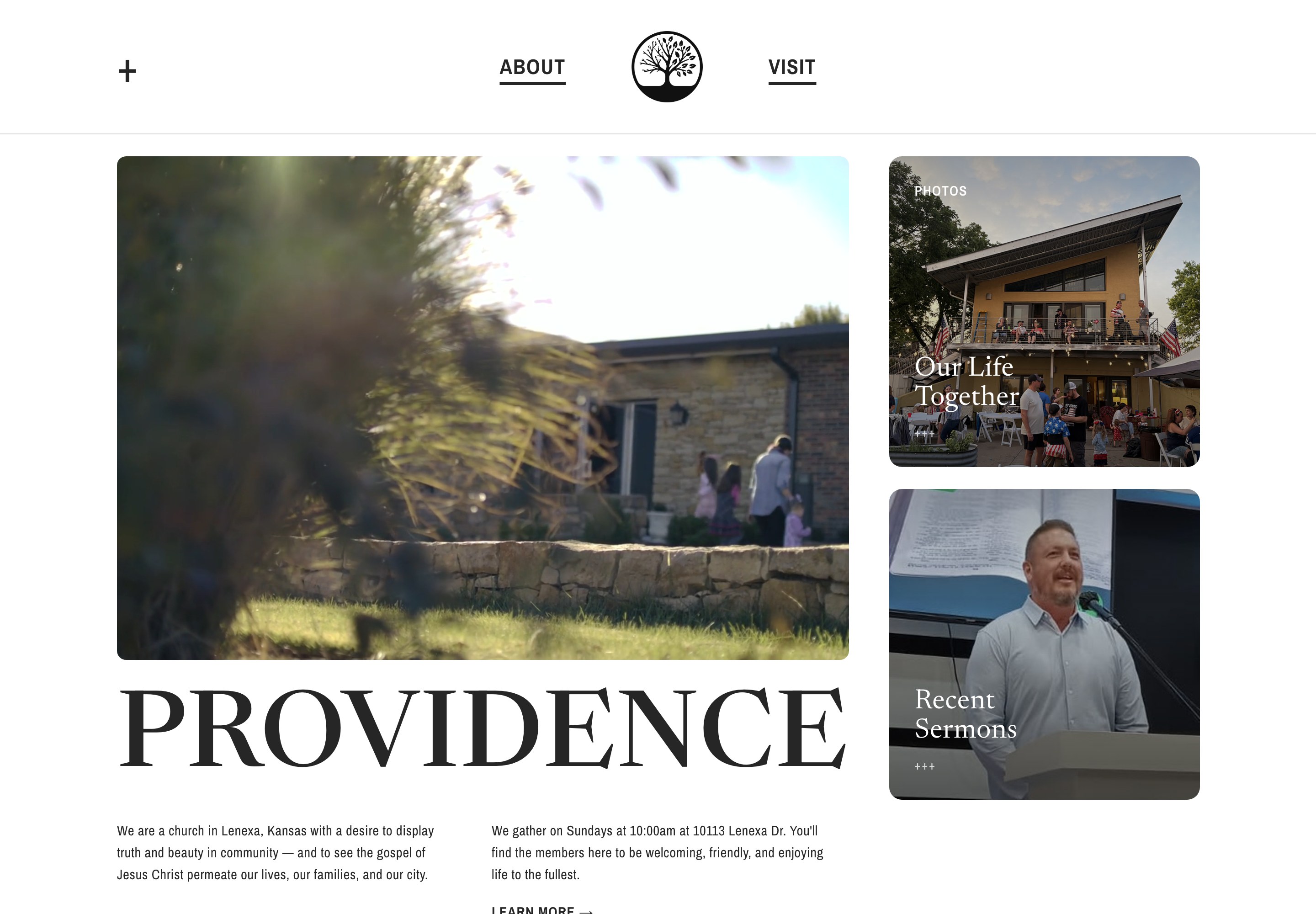
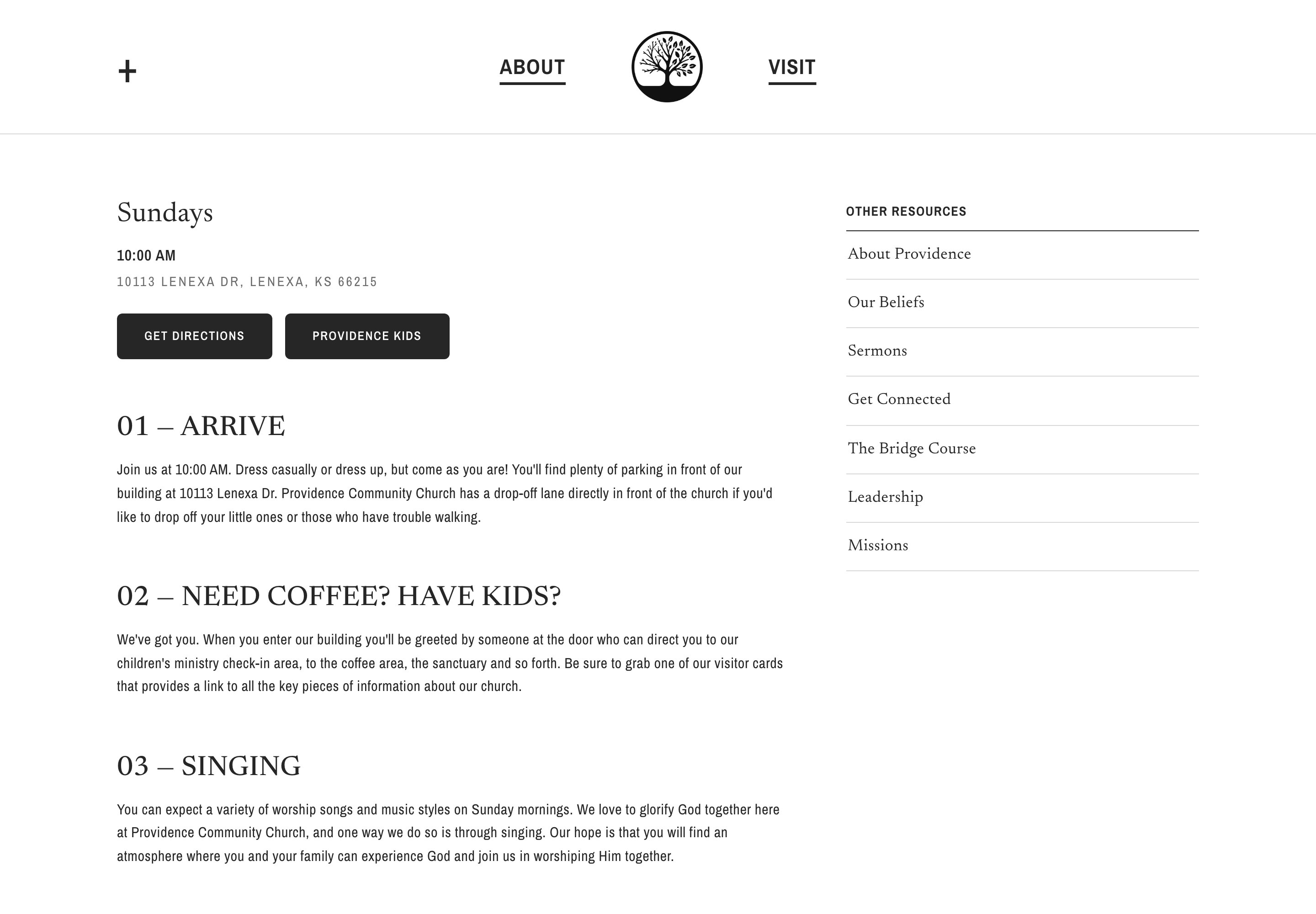
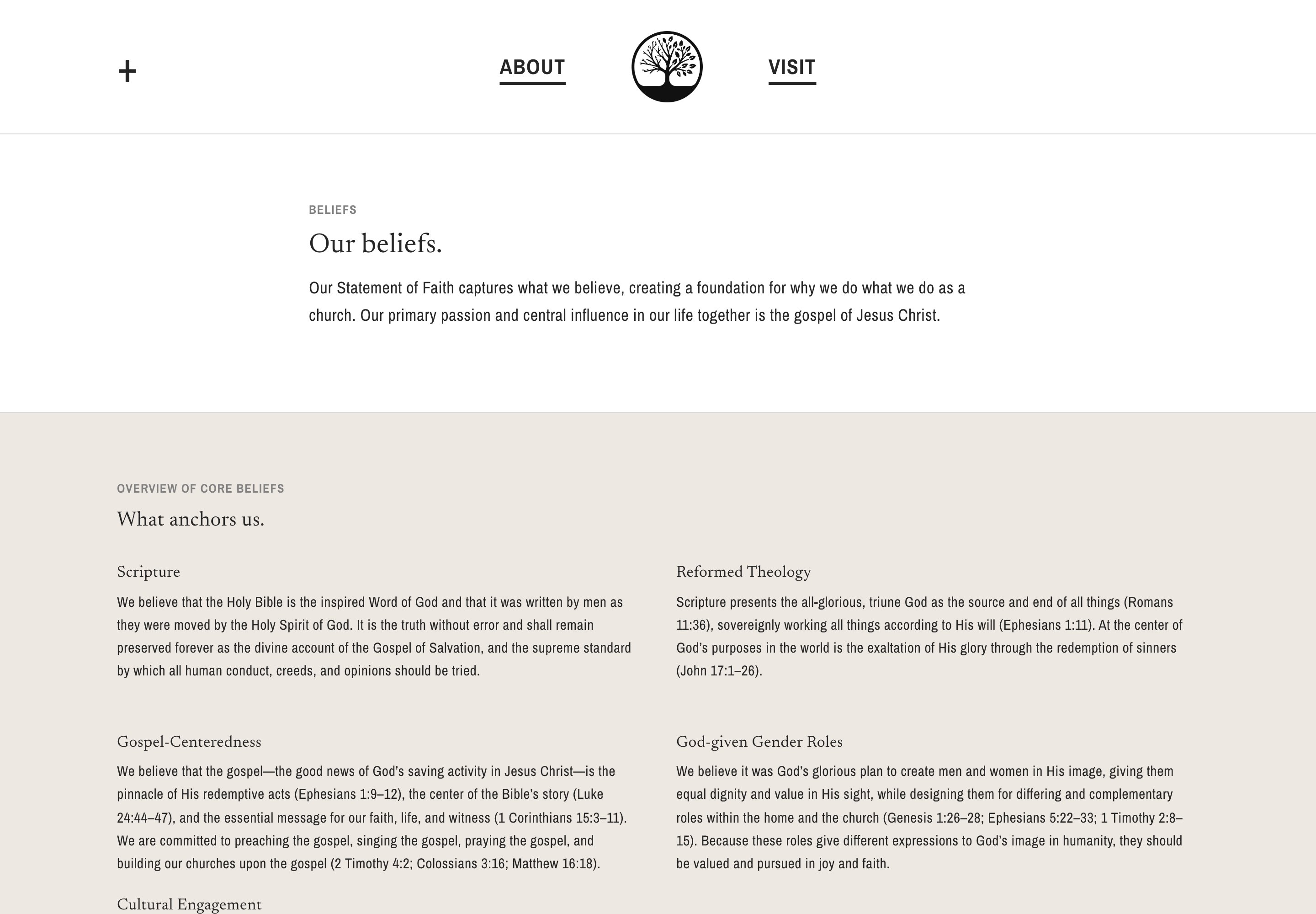
We captured every live URL on the old site along with its title tag, meta description, and canonical — sixteen pages in all, read straight off what was actually being served rather than from anyone's memory of it. Then we rebuilt each page at its original address.
Not every page deserved to survive. Some were leftovers: a landing page for an event two Easters ago, a members' meeting page, a "coming soon" placeholder still branded to the provider that had been sitting on the church's own domain. Those got twelve redirect rules pointing at somewhere real, so an old link in an old email still lands a visitor on a live page instead of an error.
The images moved too — two hundred and twenty-five files, kept at their original paths. Image URLs accumulate their own search history, and moving them for tidiness would have thrown that away for nothing.
And we fixed what nobody had gotten to
Two things turned up in the audit that are worth mentioning, not to embarrass anyone but because they are so characteristic of the model.
One page was still titled with an unfilled template placeholder — the literal words [Church Name], live, on the internet, for who knows how long. And a link in the site's own navigation pointed at a page that returned a 404; the church had a menu item that went nowhere.
Neither is negligence exactly. That is what happens when your site is one of many in a queue and nobody has a reason to read it closely. It is also precisely the sort of thing that never gets caught by the people paying for it, because they stopped looking at their own website years ago.
What got included that wasn't before
The old arrangement billed the domain registration and the hosting on top of the monthly fee. Both are now handled as part of the build, at a fraction of what they were costing separately, on infrastructure that serves the site from data centers around the world.
There is no CMS to breach, no plugin stack to patch, and no database that can fall over on a Sunday morning while a visitor is trying to find your service time. The pages are files. Files are hard to break.
Being honest about the cost
Any migration costs something in the short term. Search engines have to recrawl, re-evaluate, and settle. Anyone who tells you a rebuild carries zero SEO risk is selling you something.
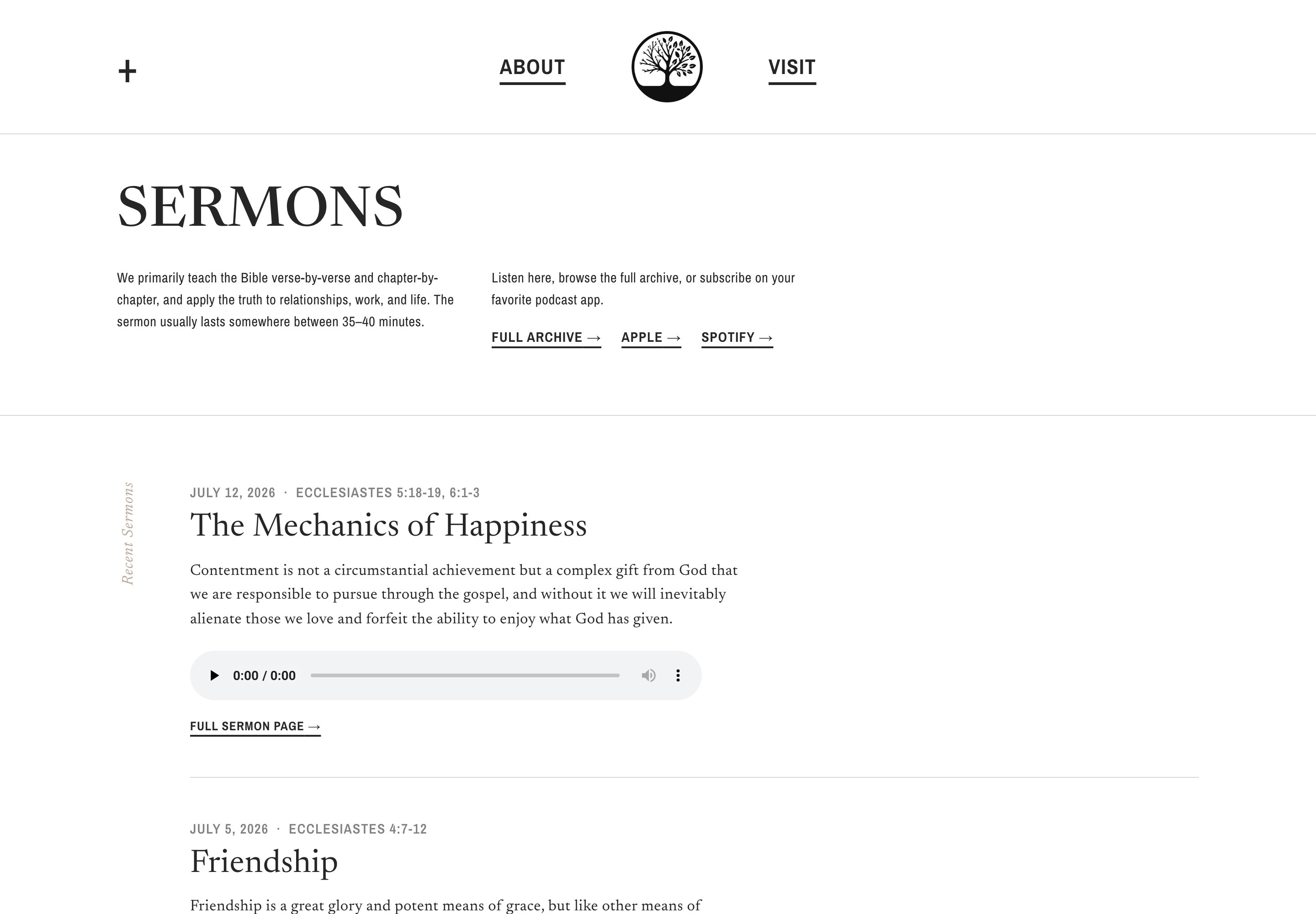
The work described above is what keeps that disruption small rather than catastrophic: same URLs, same titles, same image paths, redirects for everything retired. The disruption here was minor and expected, and it was the price of getting off a $3,600-a-year arrangement permanently.
A few weeks of settling, against a bill that would have run forever.
Where it landed
Providence has a site that loads fast, reads like it belongs to them specifically, and costs nothing per month to keep running. The source lives in their repository. If they never speak to us again, it stays up.
Basic updates — a service time, a staff photo, a change of address — are free, permanently, because those edits take a minute and charging for them would only teach a church not to ask.
That is the whole argument, and Providence is the proof of it. The complexity that justified the retainer is gone. What is left is design, writing, and care, which is what a church should have been paying for the entire time.
What is your church paying every month?
Send us the link. The first thing we will do is tell you what is worth keeping — including, sometimes, that you should stay where you are.